
How to Make a Dried Herb Garden for Cats: A Holistic Vet’s Guide to Herbal Self-Selection
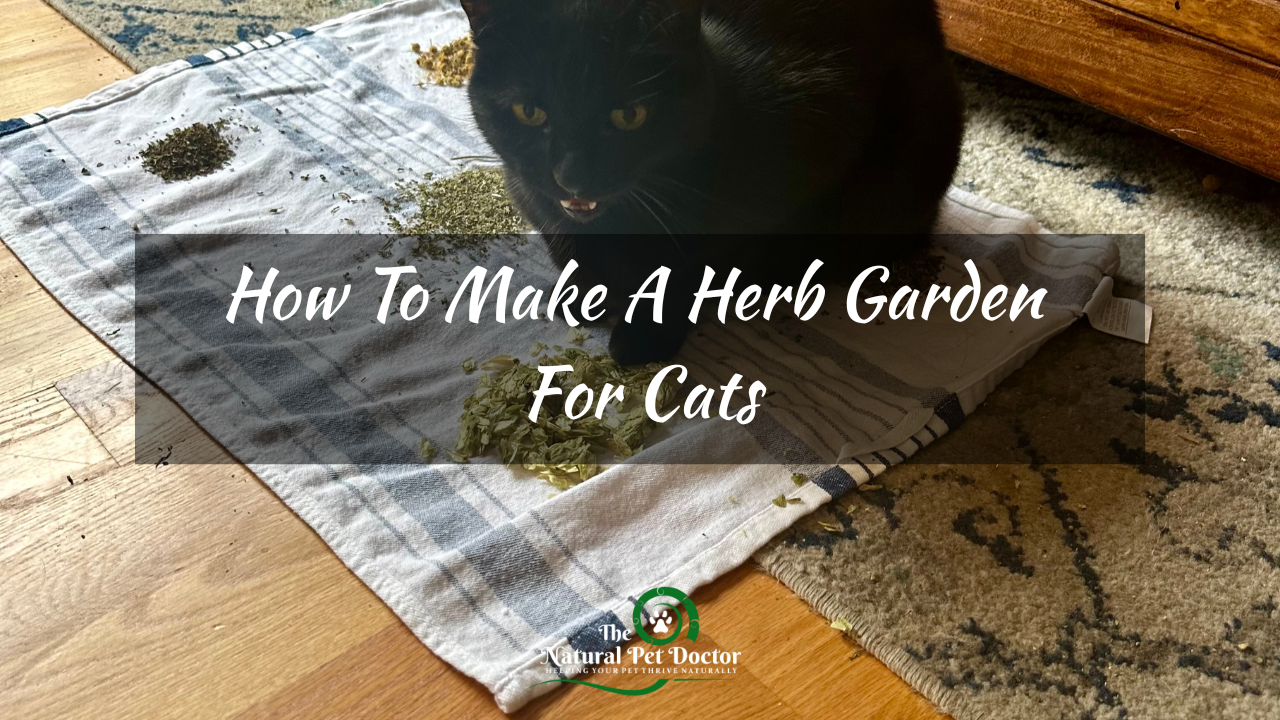
What if, instead of trying to hide one more supplement in your cat’s food, you gave your cat a few organic dried herbs to explore—and let them choose what they wanted?
Quick answer
A cat herb garden is a collection of organic dried herbs placed in separate piles on a towel or blanket. Your cat can choose whether to sniff, rub against, roll in, rest beside, nibble, or walk away from each herb. It provides sensory enrichment and gives you a chance to observe which plants interest your cat that day.
This is different from a traditional garden. There is no soil, planting, or watering involved. Dr. Woodley recommends using about one tablespoon of each organic dried herb, leaving enough space between the piles for the cat to explore each one individually.
This practice is often connected with zoopharmacognosy, the study of how animals interact with substances found in nature in response to physical or emotional needs.
In this article
Why Would a Cat Need an Herb Garden?
Cats live in a world where we make almost every decision for them. We decide what and when they eat, where they sleep, where their litter boxes are placed, and when they receive medications or supplements.
An herb garden creates one small space where the choices belong to the cat.
A cat may smell one herb and immediately begin rolling in it. Another may quietly lie beside a different herb. Some cats move among several piles, while others inspect the garden and walk away.
All of those responses matter. Walking away is still a choice.
An herb garden may be especially helpful for:
- Indoor cats who need more sensory enrichment
- Cats who appear bored, withdrawn, or reluctant to play
- Older cats who are engaging less with their surroundings
- Cats adjusting to a move, visitor, new pet, or household disruption
- Cats who have difficulty settling after a stressful experience
- Multi-cat households experiencing tension
- Cats whose stress tends to affect digestion, grooming, or urinary health
The goal is not to force a particular response. An herb garden creates an opportunity to slow down, observe, and learn more about your individual cat.
What Does Herbal Self-Selection Look Like?
When cats are given access to separate dried herbs, they may:
- Sniff one or several herbs
- Rub their cheeks or face against a pile
- Roll in the herbs
- Lick or nibble a small amount
- Stretch, play, or drool
- Take slow breaths or close their eyes
- Sit or sleep beside an herb
- Ignore an herb or leave the garden
The response may change from one day to another. A cat who chooses valerian today may prefer rose or chamomile next time.
We are beginning to understand more about the aromatic plant compounds that attract cats and influence their nervous systems. We do not need to assign a diagnosis to every choice, though. The most useful approach is to notice patterns without deciding that one interaction tells us everything about the cat’s health.
Six Herbs to Include in a Cat Herb Garden
These six herbs provide a range of aromas and traditional actions. Dr. Woodley uses organically grown dried herbs and places each one in its own pile so the cat can make a clear choice.
1. Valerian Root
Best considered for: engagement, fear, overgrooming, and difficulty settling
Valerian root is one of the most interesting herbs to offer cats because their response can look very different from the calming effect people commonly associate with valerian.
Valerian contains valerenic acid and related compounds that influence the GABA system. GABA is one of the nervous system’s primary calming neurotransmitters. Valerian also contains actinidine, an aromatic compound that can produce a catnip-like response in some cats.
In one feline study, approximately half of the cats responded to valerian root, including some cats who did not respond to catnip. This makes valerian worth trying when a cat seems completely uninterested in catnip.
A responsive cat may roll, rub, drool, stretch, or suddenly become playful. Some cats have an initial burst of activity and then settle, while others simply rest beside the valerian.
Dr. Woodley suggests considering valerian when:
- The cat seems withdrawn or emotionally flat
- An older cat needs encouragement to engage with the environment
- The cat appears fearful or has difficulty settling
- A household change has affected the cat’s normal behavior
- Stress may be contributing to overgrooming or restlessness
2. Chamomile
Best considered for: sensitive, irritable, or stress-affected cats
Chamomile offers a softer aromatic experience. It contains several flavonoids, including apigenin. In animal research, apigenin has demonstrated calming and anti-anxiety activity.
Chamomile also has a long traditional history of supporting both the nervous system and the digestive tract. That connection matters because the gut and brain are constantly communicating. Stress can influence appetite, nausea, intestinal motility, stool quality, and inflammation. Digestive discomfort can then create even more stress.
Cats often interact with chamomile quietly. A cat may sniff the flowers, rest their face near them, sit beside the pile, or fall asleep on that part of the garden.
Dr. Woodley suggests considering chamomile when:
- The cat seems irritable or restless
- The cat is recovering from a stressful event
- A sensitive cat finds catnip or valerian too stimulating
- Stress and digestive changes tend to occur together
- The cat is adjusting to a change in routine
3. Catnip
Best considered for: play, movement, engagement, and enrichment
Catnip contains an iridoid compound called nepetalactone. In responsive cats, smelling nepetalactone activates specialized scent pathways and produces the familiar rubbing, rolling, licking, kicking, and playful behavior.
Research has shown that the characteristic response to cat-attracting iridoids involves the feline mu-opioid system, which is part of the brain’s natural reward system. Researchers have also found that rubbing against certain cat-attracting plants transfers iridoid compounds onto the coat and can help repel mosquitoes. This suggests the behavior may have provided an evolutionary benefit.
The catnip response is influenced by genetics, so some cats simply do not respond. Smelling catnip typically creates the more playful reaction. A cat who eats a small amount may become more relaxed afterward.
Dr. Woodley suggests considering catnip when:
- An indoor cat needs more enrichment
- The cat seems bored or under-stimulated
- An older cat needs gentle encouragement to move
- The cat is not playing or engaging as much as usual
- You want to create a positive association with a safe area of the home
Watch cats individually in a multi-cat household. One cat’s excitement can occasionally irritate or overwhelm another cat.
4. Organic Rose Buds
Best considered for: gentle emotional comfort, change, loss, and sensitive cats
Rose buds are softer and more subtle than valerian, hops, or catnip. Rose contains aromatic compounds, flavonoids, and polyphenols. Research involving rose extracts and aroma has explored possible calming, antioxidant, and nervous-system effects.
Traditional herbal medicine has also associated rose with the heart, grief, and emotional comfort. In a cat herb garden, rose gives sensitive, elderly, or easily overwhelmed cats a quieter option.
Some cats rub against the buds, while others gently smell them or rest beside them.
Dr. Woodley suggests considering rose buds when:
- The cat has experienced the loss of an animal or person
- A companion animal has left the household
- The family has moved or experienced a major change
- The cat is recovering from a difficult illness or stressful period
- An elderly or fragile cat needs a gentle aromatic option
Use plain organic dried rose buds. Florist roses may contain pesticide residues, preservatives, dyes, or other chemical treatments.
5. Lemon Balm
Best considered for: environmental stress that also affects the gut or bladder
Lemon balm belongs to the mint family and has a light lemony aroma. It contains rosmarinic acid, other polyphenols, and several aromatic compounds.
Laboratory research has shown that lemon balm extracts can inhibit GABA transaminase, the enzyme that breaks down GABA. Animal studies have also found reductions in anxiety-like behavior under certain conditions.
Traditionally, lemon balm has been used when nervous-system stress and digestive upset occur together. That makes sense when we consider the gut-brain connection and the physical effects stress can have on cats.
Dr. Woodley suggests considering lemon balm when:
- Visitors, construction, travel, or noise have unsettled the cat
- Stress tends to reduce the cat’s appetite
- Household changes are followed by loose stool or digestive discomfort
- The cat overgrooms during stressful periods
- The cat has a pattern of stress-associated urinary flares
6. Hops
Best considered for: restlessness, overstimulation, and trouble settling
Hops has a deep, distinctive aroma. It contains bitter acids, including humulone, and a prenylated flavonoid called xanthohumol. Experimental research suggests that some hops compounds influence GABA-related pathways and sleep regulation, which helps explain the herb’s traditional association with calming and settling.
Some cats are drawn to the strong aroma, while others take one sniff and leave. Hops can also provide a quieter counterbalance in a garden containing stimulating herbs such as catnip or valerian.
Dr. Woodley suggests considering hops when:
- The cat paces or has trouble settling
- Restlessness is more noticeable in the evening or overnight
- The cat becomes overstimulated after a busy day in the home
- The cat is having difficulty settling after a stressful event
- A grounding aromatic option may balance more stimulating herbs
The important part: We can understand the plant chemistry and traditional uses, but the cat gets the final say. Put the garden down and watch what they choose that day.
How to Make an Organic Herb Garden for Your Cat
You do not need soil, pots, or gardening experience. A dried herb garden takes only a few minutes to create.
Step 1: Choose a quiet location
Use a room or corner where your cat already feels safe. Avoid busy hallways, loud appliances, and areas where another animal could corner the cat.
Step 2: Lay down a clean surface
Place a clean towel, blanket, or washable rug on the floor. If you have several cats, begin with an individual garden for each cat so you can observe their responses without competition.
Step 3: Add about one tablespoon of each herb
Place approximately one tablespoon of each organic dried herb in a separate pile. It does not need to be measured perfectly. The goal is to make each pile visible and aromatic enough for your cat to approach, smell, roll in, rest beside, or avoid.
Step 4: Keep the herbs separate
Do not mix all the herbs together. Separate piles allow your cat to move toward one herb without being surrounded by the aromas of the others. This also helps you recognize which herbs attract your cat.
Step 5: Let your cat approach voluntarily
Do not place your cat on the garden or hold an herb beneath their nose. Put the garden down and allow your cat to investigate in their own time.
Step 6: Observe without directing
Notice the first herb your cat approaches, how long they remain near it, and whether they return to it later. The goal is not to produce a dramatic response. Quiet interest is still interest.
Step 7: Refresh the garden as needed
You can leave the garden available in a safe, dry location if your cat uses it appropriately. Refresh the herbs when their aroma fades. If your cat tries to consume an entire pile, pick up the garden and offer it again during a supervised session.
Why the Herbs Should Be Organic
Quality matters because cats may rub their faces and coats through the herbs, lick their fur afterward, or nibble a small amount while exploring.
Choose organically grown dried herbs from a trusted supplier. Avoid herbs treated with pesticides, added fragrances, preservatives, dyes, or unknown ingredients. Confirm that you are purchasing the correct plant and intended plant part—for example, valerian root rather than an unidentified “valerian blend.”
Dried herbs are not the same as essential oils
These gardens use dried whole herbs. Do not substitute essential oils, fragrance oils, perfume, potpourri, or concentrated extracts. Stronger is not necessarily better, especially for a species with such a sensitive sense of smell.
When an Herb Garden Is Not Enough
An herb garden can support enrichment, choice, and emotional well-being, but it should not delay veterinary care.
Contact your veterinarian if your cat:
- Stops eating or has a significant reduction in appetite
- Vomits repeatedly or cannot keep water down
- Strains to urinate, produces little or no urine, or cries in the litter box
- Has difficulty breathing
- Becomes very weak, painful, or unresponsive
- Develops persistent diarrhea
- Suddenly hides or behaves very differently
Cats often communicate illness through subtle behavioral changes. A new interest in an herb is worth observing, but it does not explain why a cat is sick or replace appropriate testing when symptoms are present.
The Deeper Value of Letting Cats Choose
So much of pet care focuses on what we can give, add, or do. When a cat develops a problem, it is easy to jump from one food or supplement to the next without pausing to observe the whole animal.
Herbal self-selection invites us to slow down.
We can learn about the traditional uses and chemistry of these plants, and then let the cat have the final say. The garden becomes a conversation rather than another thing being done to them.
It also gives indoor cats a way to interact with the natural world. Even when a cat does not choose the herb we expected, they have still received something valuable: novelty, enrichment, autonomy, and the freedom to walk away.
Ready to Create an Herb Garden for Your Cat?
Choose a ready-made feline garden or purchase individual organic dried herbs to build your own.
Affiliate disclosure: Some links in this article may be affiliate links. The Natural Pet Doctor may receive a small commission from qualifying purchases at no additional cost to the reader. Dr. Woodley only shares resources she personally uses or feels comfortable recommending.
Frequently Asked Questions About Herb Gardens for Cats
What is the best herb to put down first for a cat?
Catnip is the most familiar starting point, but not every cat responds to it. Offering catnip alongside valerian, chamomile, rose buds, lemon balm, and hops gives your cat more choices. Valerian may appeal to some cats who do not respond to catnip.
How much dried herb should be used?
Use approximately one tablespoon of each organic dried herb. Place each herb in its own pile on a clean towel or blanket so your cat can explore the aromas separately.
Can cats eat the herbs in an herb garden?
Many cats will only sniff, rub, roll, or rest near the herbs. Some may nibble a small amount. If your cat attempts to eat an entire pile, remove the garden and offer it again with supervision. An herb garden is intended primarily for self-directed exploration rather than as a measured oral supplement.
How often should a cat herb garden be offered?
There is no single schedule that fits every cat. You might offer it during environmental changes, after a stressful event, when your cat seems bored, or as regular enrichment. Refresh the herbs when their scent fades and notice whether your cat’s preferences change over time.
Which dried herbs are calming for cats?
Chamomile, lemon balm, rose buds, valerian root, and hops all have traditional associations with nervous-system support or settling. Individual responses vary, and valerian may initially stimulate some cats before they relax.
Why do some cats ignore catnip?
The response to catnip is influenced by genetics, so some cats do not react to it. These cats may still respond to valerian or other aromatic plants. Ignoring an herb is also a valid part of self-selection.
Can essential oils be used in a cat herb garden?
No. This type of herb garden uses organic dried whole herbs. Essential oils and concentrated fragrance products are different preparations and should not be substituted for dried plant material.
Can an herb garden treat a cat’s anxiety or illness?
An herb garden can offer enrichment, choice, and emotional support, but it is not a replacement for diagnosing and treating illness. Persistent anxiety, appetite loss, digestive symptoms, urinary changes, pain, or major behavior changes should be evaluated by a veterinarian.
Research References
- Bol S, Caspers J, Buckingham L, Anderson-Shelton GD, Ridgway C, Buffington CA, Schulz S, Bunnik EM. Responsiveness of cats (Felidae) to silver vine (Actinidia polygama), Tatarian honeysuckle (Lonicera tatarica), valerian (Valeriana officinalis) and catnip (Nepeta cataria). BMC Vet Res. 2017;13(1):70. doi: 10.1186/s12917-017-0987-6. PMID: 28302120; PMCID: PMC5356310.
- Uenoyama R, Miyazaki T, Hurst JL, Beynon RJ, Adachi M, Murooka T, Onoda I, Miyazawa Y, Katayama R, Yamashita T, Kaneko S, Nishikawa T, Miyazaki M. The characteristic response of domestic cats to plant iridoids allows them to gain chemical defense against mosquitoes. Sci Adv. 2021;7(4):eabd9135. doi: 10.1126/sciadv.abd9135. PMID: 33523929; PMCID: PMC7817105.
- Benke D, Barberis A, Kopp S, Altmann KH, Schubiger M, Vogt KE, Rudolph U, Möhler H. GABA A receptors as in vivo substrate for the anxiolytic action of valerenic acid, a major constituent of valerian root extracts. Neuropharmacology. 2009;56(1):174–181. doi: 10.1016/j.neuropharm.2008.06.013. PMID: 18602406.
- Viola H, Wasowski C, Levi de Stein M, Wolfman C, Silveira R, Dajas F, Medina JH, Paladini AC. Apigenin, a component of Matricaria recutita flowers, is a central benzodiazepine receptors-ligand with anxiolytic effects. Planta Med. 1995;61(3):213–216. doi: 10.1055/s-2006-958058. PMID: 7617761.
- Awad R, Muhammad A, Durst T, Trudeau VL, Arnason JT. Bioassay-guided fractionation of lemon balm (Melissa officinalis L.) using an in vitro measure of GABA transaminase activity. Phytother Res. 2009;23(8):1075–1081. doi: 10.1002/ptr.2712. PMID: 19165747.
- Ibarra A, Feuillere N, Roller M, Lesburgere E, Beracochea D. Effects of chronic administration of Melissa officinalis L. extract on anxiety-like reactivity and on circadian and exploratory activities in mice. Phytomedicine. 2010;17(6):397–403. doi: 10.1016/j.phymed.2010.01.012. PMID: 20171069.
- Min B, Ahn Y, Cho HJ, Kwak WK, Suh HJ, Jo K. GABAA receptor-mediated sleep-promoting effect of Saaz-Saphir hops mixture containing xanthohumol and humulone. Molecules. 2021;26(23):7108. doi: 10.3390/molecules26237108. PMID: 34885687; PMCID: PMC8659287.
- Boskabady MH, Shafei MN, Saberi Z, Amini S. Pharmacological effects of Rosa damascena. Iran J Basic Med Sci. 2011;14(4):295–307. PMID: 23493250; PMCID: PMC3586833.
This information is for educational purposes only and is not intended to replace the advice of your own veterinarian. If you wish to apply ideas contained in thenaturalpetdoctor.com, you are taking full responsibility for your actions. Please consult your veterinarian for medical advice for your own pets. Dr. Katie Woodley cannot answer specific questions about your pet’s medical issues or make medical recommendations for your pet without first establishing a veterinarian-client-patient relationship. Links in the blog are typically affiliate links that let you help support us.

Welcome To Our Natural Pet Care Blog!
Stay connected with weekly holistic pet care tips and updates!

Get your Standard Process Supplements Here!

