
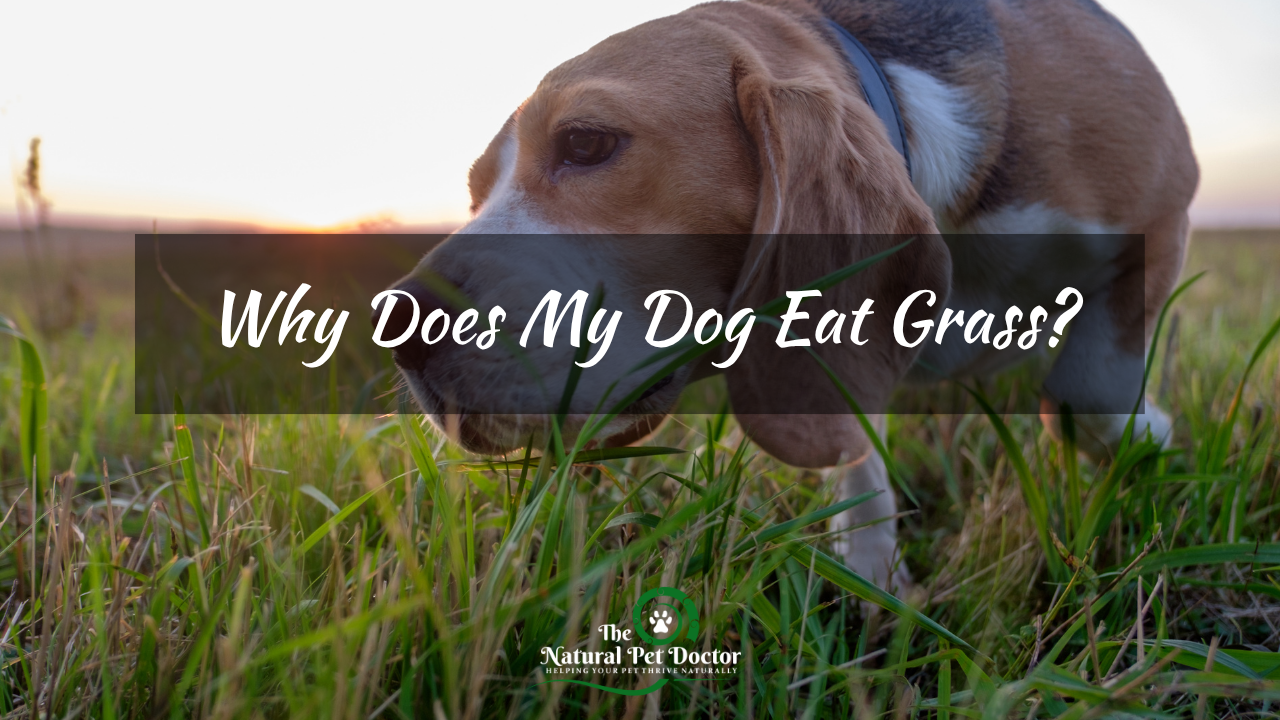
Why Does My Dog Eat Grass? A Holistic Vet Explains What It Really Means
By Dr. Katie Woodley, holistic veterinarian and founder of The Natural Pet Doctor | Updated September 11, 2026
Why Do Dogs Eat Grass?
The short answer: Dogs may eat grass because they enjoy it, are hungry, want plant material, or are responding to nausea, digestive irritation, stress, or boredom. Occasional relaxed grazing is often normal. Sudden, frantic, or repetitive grass eating—especially with lip licking, gulping, vomiting, diarrhea, appetite changes, weight loss, or abdominal pain—deserves closer attention and may require a veterinary evaluation.
The most useful first step is to track when the behavior happens and what occurs before and afterward. Then review meal timing, diet, fiber, medications, stress, and other digestive signs with your veterinarian. In selected dogs, it may be worth considering a chlorophyll trial, intestinal-soothing support, or functional gut health testing, but no supplement or stool test replaces a medical workup when symptoms persist.
Key Takeaways
- Grass eating is common and doesn't automatically mean a dog is sick.
- The pattern and accompanying symptoms matter more than the grass itself.
- Frantic grass eating with vomiting, diarrhea, or pain can signal gastrointestinal irritation or another health problem.
- Track the behavior for seven days before changing several variables at once.
- Your veterinarian should evaluate persistent or concerning symptoms.
Is It Normal for Dogs to Eat Grass?
Yes. Occasional grass eating can be completely normal, especially when a dog is relaxed, has a normal appetite, produces normal stool, and does not repeatedly vomit afterward.
In one controlled study, researchers gave 12 healthy dogs access to grass over multiple sessions. Every dog ate grass. Researchers observed only five vomiting events across 709 grass-eating events. The dogs also ate more grass before their regular meal and earlier in the day, suggesting that hunger, satiety, and ordinary food-seeking behavior may contribute.
Another study of plant-eating dogs found that vomiting sometimes followed grass eating, but many dogs never vomited. Taken together, the research does not support the idea that dogs always eat grass because they feel sick or are deliberately trying to vomit.
Casual Grazing Versus Frantic Grass Eating
The most useful question is not simply whether your dog eats grass. It is how they eat it and what happens before and afterward.
| Pattern | More likely casual grazing | More concerning pattern |
|---|---|---|
| What it looks like | Relaxed nibbling, occasional behavior, and easy redirection | Urgent searching or gulping, repetitive behavior, or difficulty interrupting it |
| Other signs | Normal appetite, energy, stool, and body weight | Lip licking, drooling, vomiting, diarrhea, pain, appetite changes, or weight loss |
Signs of casual grass grazing
- Your dog appears relaxed and nibbles only a few blades.
- The behavior is occasional rather than urgent or obsessive.
- Appetite, energy, stool quality, and body weight remain normal.
- Vomiting does not regularly follow the behavior.
Signs that grass eating may be a gut health clue
- Your dog urgently searches for grass or gulps large quantities.
- Grass eating happens during the night or after a long gap between meals.
- You notice lip licking, drooling, swallowing, gulping, burping, or yellow-bile vomiting.
- The pattern occurs with diarrhea, mucus, appetite changes, weight loss, or abdominal discomfort.
- The behavior began after antibiotics, another medication, a dietary change, or a stressful event.
None of these signs diagnose a specific gut disorder. They tell us that the grass eating should be considered as one part of a larger pattern.
Common Reasons Dogs Eat Grass
Normal exploration and preference
Some dogs may simply enjoy the smell, moisture, taste, and texture of fresh grass. For these dogs, grazing can be a normal form of sensory exploration.
Hunger and meal timing
Dogs in the controlled grass-eating study ate more before their meal than afterward. If your dog eats grass early in the morning, late at night, or after going many hours without food, note whether hunger or empty-stomach nausea may be part of the pattern.
Diet and fiber
Grass provides indigestible plant material. One published case report described a dog with seven years of daily plant eating and vomiting whose behavior stopped after a higher-fiber diet was introduced. That is interesting, but it represents one dog and does not prove that every grass-eating dog is fiber deficient.
Instead, review whether the diet is complete and balanced, appropriate for your dog's health needs, well tolerated, and providing suitable fiber diversity for the microbiome.
Digestive irritation or nausea
Frantic grass seeking accompanied by reflux-like behavior, vomiting, poor appetite, or abnormal stool makes gastrointestinal irritation more relevant. Potential contributors can include dietary intolerance, parasites, medication effects, pancreatitis, chronic enteropathy, or dysfunction higher in the digestive tract.
Stress, boredom, or learned behavior
Some dogs graze when they are anxious, bored, overstimulated, or attempting to prolong a walk. Observe what was happening immediately before the behavior rather than assuming every episode begins in the stomach.
A Step-by-Step Plan for Dogs That Eat Grass
Step 1: Track the pattern for seven days
Record the time of day, when your dog last ate, whether the behavior was relaxed or frantic, and what happened afterward. Include stool quality, appetite, vomiting, lip licking, gulping, medications, treats, food changes, and stressful events.
Use the free Pet Gut Health Tracker below to organize those observations. A week of consistent information can reveal patterns that are difficult to recognize from memory.
Download the Free Pet Gut Health Tracker
Track meals, stool, vomiting, grass eating, medications, and stress for one week so you can bring a clearer pattern to your veterinarian.
Step 2: Check the simple foundations
If your dog otherwise feels well, begin with the simplest possibilities. Ask your veterinarian whether meal timing is appropriate. Smaller, more frequent meals or a small bedtime snack may help some dogs with empty-stomach nausea, but this should be tailored to your dog.
Review the whole diet before buying multiple supplements. Consider digestibility, protein and fat tolerance, hydration, fiber diversity, recent diet changes, and whether the food is complete and balanced for your dog.
Make sure your dog also receives enough sniffing, movement, play, and safe opportunities to explore. Boredom-related grazing requires a different solution from nausea-related grass seeking.
Step 3: Consider a targeted chlorophyll trial
In my clinical experience, Standard Process Chlorophyll Complex has dramatically reduced or even resolved persistent grass eating in some dogs. There are no published canine trials proving that grass eating indicates a chlorophyll deficiency or that chlorophyll will work for every dog. I treat it as a focused nutritional trial after considering the dog's diet, symptoms, medications, and medical history.
The general educational dosing guide used for dogs is shown below. Chlorophyll Complex is a human supplement, so confirm with your veterinarian that it is appropriate for your dog before starting.

| Dog weight | General daily guide |
|---|---|
| 1 to 20 pounds | 2 softgels |
| 21 to 50 pounds | 3 softgels |
| More than 51 pounds | 4 softgels |
View Standard Process Chlorophyll Complex
Step 4: Support an irritated intestinal environment
If grass eating occurs with occasional loose stool, digestive sensitivity, or reflux-like signs, I also consider whether the intestinal environment needs soothing support.
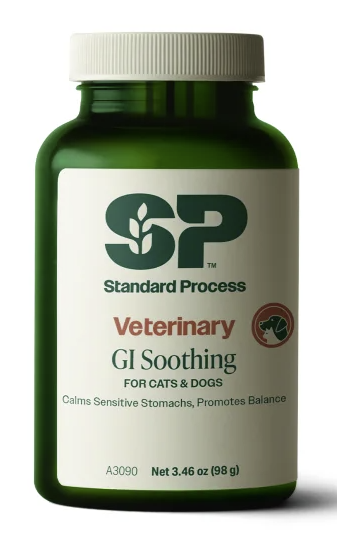
Standard Process Veterinary GI Soothing combines mucilaginous botanicals, including slippery elm, marshmallow root, and okra, with Saccharomyces boulardii and postbiotic ingredients. These ingredients support digestive comfort, the intestinal lining, stool quality, and microbial balance.
GI Soothing is not a substitute for diagnosing persistent vomiting, diarrhea, or abdominal pain. It is one supportive option when occasional gastrointestinal irritation appears to be part of the pattern. Follow the product label and your veterinarian's individualized guidance.
View Standard Process GI Soothing
Step 5: Investigate recurring gut symptoms
If your dog repeatedly eats grass with other symptoms, it is time to stop guessing. Your veterinarian may recommend bloodwork, fecal testing, pancreatic testing, imaging, a therapeutic diet trial, or other diagnostics based on your dog's examination and history.
The Innovative Pet Lab Comprehensive Gut Check is an at-home stool test that evaluates markers associated with intestinal inflammation, digestive and pancreatic function, mucosal immune activity, intestinal barrier function, and microbial or detoxification activity.
This test does not independently diagnose why a dog eats grass, and it should not replace veterinary evaluation. It can provide additional information that helps you and your veterinary team decide which part of the digestive foundation deserves closer attention.
Explore the Innovative Pet Lab Comprehensive Gut Check
When Should You Call Your Veterinarian?
Contact your veterinarian if grass eating is sudden, intense, or obsessive, particularly when it occurs with any of the following:
- Repeated vomiting or unproductive retching
- A swollen or painful abdomen
- Persistent diarrhea or blood in the stool or vomit
- Loss of appetite, weight loss, weakness, or lethargy
- Excessive thirst or other significant behavior changes
- Eating dirt, fabric, rocks, or other unusual nonfood objects
Prevent your dog from eating grass treated with herbicides, pesticides, or fertilizer. Avoid grass that may be contaminated with animal feces and make sure your dog is not consuming a toxic plant growing among the grass.
Frequently Asked Questions
Do dogs eat grass to make themselves vomit?
Sometimes a dog eats grass around an episode of nausea or vomiting, but research shows that vomiting is not the usual outcome. Most grass eating appears to occur without obvious illness beforehand.
Does eating grass mean my dog has a nutritional deficiency?
Not necessarily. Nutritional or fiber-related factors may matter in individual dogs, but grass eating by itself does not prove a deficiency. Review the complete diet and surrounding symptoms before assuming a nutrient is missing.
Can chlorophyll stop a dog from eating grass?
I have seen Standard Process Chlorophyll Complex reduce or resolve persistent grass eating in some dogs in clinical practice. This is a clinical observation, not a result established by controlled canine studies. Consider it an individualized nutritional trial rather than a guaranteed treatment.
Should I stop my dog from eating grass?
Occasional grazing on clean, untreated grass may not require intervention when your dog otherwise feels well. Interrupt the behavior if the grass may contain chemicals, fecal contamination, toxic plants, or sharp seed heads, or if your dog is gulping large amounts and appears unwell.
What tests can help a dog that keeps eating grass and vomiting?
The correct tests depend on the dog's other signs and physical examination. Your veterinarian may consider bloodwork, fecal or parasite testing, pancreatic testing, imaging, or a trial of a therapeutic diet. Functional stool testing may provide additional information about digestive function, inflammation, immune activity, and intestinal barrier health. Download our free Gut Health Guide to learn more.
Why is my dog eating grass and vomiting yellow bile?
Yellow bile can appear when the stomach is empty, but it can also occur with nausea or gastrointestinal disease. Record how long your dog went without food, whether the pattern happens at a consistent time, and whether appetite, stool, energy, or weight have changed. Repeated bile vomiting or other symptoms should be discussed with your veterinarian rather than managed only by changing meal timing. Learn more about bile vomiting here: IBD and Bile Vomiting in Dogs and Cats: Root Causes, Testing & Natural Treatment Plan
Why is my dog suddenly eating grass frantically?
Sudden, frantic grass eating can accompany nausea, reflux-like discomfort, dietary indiscretion, a medication effect, or another digestive problem. Remove access to chemically treated grass and contact your veterinarian if the behavior continues or occurs with retching, abdominal swelling, pain, repeated vomiting, lethargy, or loss of appetite.
How do I stop my dog from eating grass?
First, determine whether the behavior is casual or connected to symptoms. Supervise outdoor access, avoid treated or contaminated grass, track timing and symptoms, review the diet and meal schedule, and provide appropriate enrichment. If the behavior is persistent or symptomatic, work with your veterinarian to address the cause instead of focusing only on stopping the grass eating.
The Bottom Line
Do not panic every time your dog eats a blade of grass. Occasional relaxed grazing in a dog who feels well may be normal. A new, frantic, or repetitive pattern associated with vomiting, reflux-like signs, stool changes, or appetite changes deserves closer attention.
Track the pattern first. Then address the basics, choose nutritional support intentionally, and investigate further if symptoms continue. The goal is not merely to suppress the behavior. It is to understand what the entire pattern may be communicating.
Continue With a Digestive Health Plan
If the tracker shows a recurring pattern and you want a structured way to work through the foundations, explore my Digestive Reset Roadmap. It helps pet parents move from scattered symptom chasing to an organized digestive health plan.
Sources
- Bjone SJ, Brown WY, and Price IR. Grass eating patterns in the domestic dog.
- Sueda KLC, Hart BL, and Cliff KD. Characterisation of plant eating in dogs.
- Kang BT and colleagues. A high-fiber diet-responsive case in a Poodle with long-term plant-eating behavior.
Disclaimer: This article is for general educational purposes only. It does not establish a veterinarian-client-patient relationship and is not a substitute for an examination, diagnosis, or individualized treatment plan from your pet's veterinarian. These statements have not been evaluated by the Food and Drug Administration. These products are not intended to diagnose, treat, cure, or prevent any disease. This article contains affiliate links. If you purchase through them, The Natural Pet Doctor may receive a commission at no additional cost to you.

Welcome To Our Natural Pet Care Blog!
Stay connected with weekly holistic pet care tips and updates!

Get your Standard Process Supplements Here!

