
How to Reduce Stress in Indoor Cats: 9 Simple Enrichment Ideas from a Holistic Veterinarian
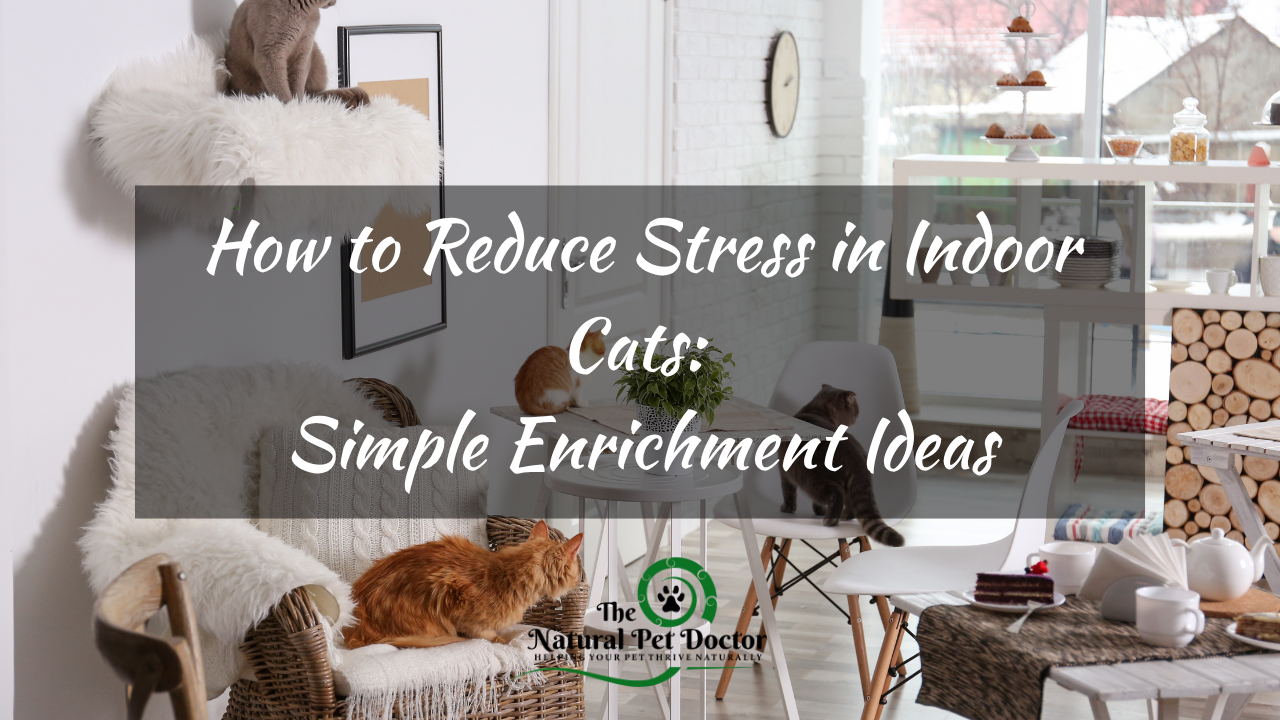
Key Takeaways
- Stress in cats is often quiet. Hiding, over-grooming, appetite changes and litter box changes can all be signs.
- In multi-cat homes, resource guarding rarely looks like fighting. One cat sitting on the stairs or in a doorway can block another.
- Enrichment isn't just entertainment. Choice, predictability, safe spaces and rest support a cat's nervous system.
- More stimulation isn't always better. Rest and recovery matter just as much as play.
- Calming supplements can help some cats, but they work best after you've found and reduced the source of stress.
Your indoor cat may have a pretty comfortable life. Food is delivered. There's a warm place to sleep. No predators, no freezing rain, no need to hunt dinner.
But indoor living can also take away many of the things cats are naturally designed to do: climb, hide, stalk, hunt, sniff, scratch, explore, forage, and make choices throughout the day. For some cats, that can contribute to boredom, frustration, or chronic stress.
I saw how quietly stress can show up with my own cat, Kiwi, and I'll share exactly what I noticed and what I changed below.
Watch: How to Reduce Stress in Indoor Cats
In this clip from my recent veterinary conference lecture on stress, I share the simple enrichment strategies I use with my own cats, including vertical spaces, foraging, food puzzles, sensory enrichment, cat grass, bird watching, and one of my favorites: herb gardens that give cats more choice in their environment.
What Are the Signs of Stress in Indoor Cats?
Cats often hide stress rather than show obvious anxiety. Common signs of stress in indoor cats include:
- hiding more, or hiding in unusual places
- over-grooming or bald patches
- eating less, or eating quickly and leaving
- urinating or defecating outside the litter box
- digestive upset, such as vomiting or soft stool
- increased vocalization
- becoming more reactive, irritable or withdrawn
- hesitating, rushing past or watching another pet before reaching food, litter or a resting spot
These signs can also have medical causes, so they should never automatically be blamed on stress. If your cat stops eating for more than a day, is straining to urinate, or has ongoing digestive changes, see your veterinarian. A cat that cannot urinate is an emergency.
Why Do Indoor Cats Get Stressed?
Indoor cats get stressed when their environment doesn't meet their needs as a species, or when they're dealing with ongoing challenges they can't escape, such as conflict with another pet, noise, pain, or changes in routine.
The American Association of Feline Practitioners (AAFP) and International Society of Feline Medicine (ISFM) Feline Environmental Needs Guidelines describe five pillars of a healthy feline environment:
- a safe place
- multiple, separated key resources (food, water, litter, scratching, play and resting areas)
- opportunities for play and predatory behavior
- positive, consistent and predictable interaction with people
- an environment that respects the cat's sense of smell
Enrichment isn't just about keeping your cat entertained. Predictability, choice, safe spaces, enough rest, and the chance to perform normal feline behaviors all support a cat's ability to adapt and recover from everyday stress.
9 Simple Ways to Reduce Stress in Indoor Cats
1. Make Sure Every Cat Can Reach Food, Water, Litter and Rest
Before you add a single toy, check this.
After we came home from a trip, Kiwi stopped eating and started hiding in places she never normally goes. As I watched her more closely, I noticed something that's easy to miss.
Moki likes to sit on our stair landing. If Kiwi saw him there, or saw Tico sitting at the top of the stairs, she'd hesitate. When she did go up, she'd run past them as fast as she could. And when she used the litter trays, she was watching where they were the whole time.
No hissing. No fights. Nothing that looks like a problem if you're just walking through the room.
That's what resource guarding in cats often looks like. It isn't always fighting. Often it's one cat sitting in just the right spot (a doorway, a hallway, a stair landing, near the food bowls) to make another cat think twice about getting to what she needs.
The setup that worked for our three cats before wasn't meeting Kiwi's needs anymore. Here's what I changed:
- I changed where we feed Kiwi and made sure she was getting enough calories every day, rather than assuming she was eating enough.
- I made time to play with her every day, giving her positive one-on-one interaction.
- I made sure our other cat still got his supervised outdoor time, which helped prevent him from redirecting that energy onto Kiwi.
- I added a stair and scratching post beside the cabinet where we keep another food station, so Kiwi could reach her food more easily as a senior cat.
If you live with more than one cat, look at your home through each cat's eyes and ask:
- Can each cat reach food and water without passing another cat?
- Is there a litter tray they can get to without walking through a "checkpoint"?
- Does each cat have a resting place where they can't be cornered, ideally with more than one way out?
- Are food, water, litter and resting spots spread out, or clustered in one area?
A common guideline is one litter tray per cat plus one, placed in different areas of the home rather than lined up side by side. If you have stairs, it can help to have options on more than one level.
A home that worked well before may not meet your cat's needs today, especially after travel, illness, a new pet, or a cat simply getting older.
2. Add Vertical Space and Hiding Spots
Cats often feel safer when they have control over where they spend their time. Give them options like:
- cat trees and wall shelves
- window perches
- covered beds and cardboard boxes
- quiet resting areas where other pets or people can't constantly bother them
I have three black cats, and they all use their environment differently. One may want to be up high watching everything while another prefers a quiet hiding place. Giving them those choices is an important part of enrichment.
It doesn't need to be expensive. Sometimes a strategically placed cardboard box becomes the favorite piece of furniture in the house.
3. Turn Mealtime Into Foraging
Cats are natural hunters, yet many indoor cats eat every meal from the same bowl in the same place every day. You can make mealtime more enriching with:
- puzzle feeders and slow feeders
- hiding small portions of food
- treat hunts
- moving feeding locations
- wider feeding surfaces
Mine Pet Platter: I use the Mine Pet Platter with my own cats because it gives them a wider, more interesting feeding surface and changes how they interact with their meals. Even something as simple as changing how food is presented can add enrichment. This type of plate also helps reduce whisker fatigue that can occur with bowls.
4. Play in a Way That Mimics Hunting
Think about the natural hunting sequence: stalk, chase, pounce, capture. Indoor play can recreate pieces of that.
Try rotating toys instead of leaving every toy out all the time. A toy that disappears for a week can suddenly become interesting again when it comes back.
Feline Essentials toys: I like several of the Feline Essentials toys because they encourage movement, curiosity, and different types of play.
But enrichment doesn't have to be expensive. One of my cats loves crumpled paper. You can also try cardboard boxes, tunnels, wand toys, feathers (under supervision), food puzzles, and small toys hidden around the house.
The goal isn't more stuff. It's more novelty, interaction, and choice.
5. Bring the Outdoors In
Indoor cats miss many of the smells, sounds, textures and movement they would encounter outside. You can safely recreate some of that with:
- a bird feeder near a safe viewing window
- screened windows or doors
- cat grass
- safe natural textures and new scents
- bird sounds
- rotating safe objects from outdoors
Pet Greens: Pet Greens are one simple way to offer cat grass indoors. Some cats love it. Some ignore it. That's okay. The point isn't to force interaction. It's to provide the opportunity.
6. Create a Cat Herb Garden
This is one of my favorite enrichment tools. A cat herb garden is a small selection of pet-appropriate dried herbs that cats can investigate on their own. They may sniff, rub, sit on, taste a little, or walk away entirely. That choice is part of the enrichment.
In my lecture, I showed my cat Moki exploring herbs like valerian, chamomile, rose hips, lavender, catnip, hops, lemon balm, and marshmallow root.
Feline Essential Herb Havens: Herb Havens are an easy option if you want to try this kind of sensory enrichment without creating your own setup from scratch.
We aren't trying to diagnose which herb a cat "needs." We're providing safe sensory stimulation and choice.
7. Engage All Five Senses
Good enrichment uses more than one sense:
- Smell: herbs, cat grass, safe outdoor scents, and new objects
- Sound: birds outside and gentle environmental sounds
- Touch: different blankets, beds, scratching materials and textures
- Taste: appropriate variety in foods, treats and feeding experiences
- Thinking: food puzzles, treat hunts, hiding games and problem-solving
You don't need to do everything. Think of enrichment as a menu.
8. Protect Rest and Recovery
More stimulation isn't always better. Cats also need quiet, uninterrupted places where they feel safe enough to rest.
If your cat is dealing with pain, chronic itching, nausea, GI discomfort, conflict with another pet, poor sleep, or constant household disruption, another toy may not be the first thing they need.
I think about stress support in two parts:
- Reduce the load: What keeps filling the stress bucket?
- Build resilience: What helps this cat recover?
Recovery can include predictability, control, sleep, species-appropriate enrichment, nutrition, gut support, and targeted therapies when appropriate.
9. Consider Calming Support, After the Environment
Environmental changes should come first. I don't want supplements replacing the work of creating a safe, cat-friendly home. But some cats may benefit from nutritional or calming support as one piece of a broader plan.
These are examples of products I use in practice. The right fit depends on the individual cat, so always let your veterinarian know about any supplements or herbs you're giving.
- Real Mushrooms Functional Feline: medicinal mushrooms that may fit into a broader nutritional support strategy, depending on the cat.
- Standard Process Calming Comfort Pro: an option that may fit into an individualized stress-support plan.
- Feline Essentials Cat Calm: a feline-specific product that may be useful when calming support is appropriate.
The important question isn't "What supplement should I give my stressed cat?" It's "Why is my cat stressed in the first place?" That might involve pain, GI discomfort, conflict with another cat, lack of sleep, environmental changes, boredom, or an underlying medical problem.
There's still this idea that giving one thing will fix everything, or that we'll know if something is working within a few days. Most of the time, it takes a few small changes and enough time to see how your cat responds.
The supplement is the support. It shouldn't replace finding the reason.
My Indoor Cat Enrichment Resource List
Disclosure: Some of the links below are affiliate links, which means I may earn a small commission at no extra cost to you. I only share products I use with my own cats or in practice.
Feeding and foraging
Play and enrichment
Sensory enrichment
Nutritional and calming support
Frequently Asked Questions About Stress in Indoor Cats
Start With One Small Change
You don't need to turn your house into a feline amusement park. Choose one thing:
- Check that every cat can reach food, water and a litter tray without passing a "checkpoint."
- Move a chair next to a window.
- Add a cardboard box.
- Hide a few treats.
- Rotate some toys.
- Give your cat a quiet place where no one bothers them.
Then give it time. The goal isn't a completely stress-free cat. It's helping your cat build the capacity to adapt, recover, and stay resilient when normal stressors happen.
Not Sure if Your Pet Is Stressed or Anxious?
Many pets are very good at hiding signs of stress. Along with looking at behavior, health and the home environment, a non-invasive stool-based stress marker test may offer another piece of information to discuss with your veterinarian.
The In-Home Stress Test by Innovative Pet Lab is an at-home collection option for pet parents who want to explore this additional information. A single stool stress-hormone measurement cannot, by itself, diagnose anxiety, confirm chronic stress, or tell you what is causing a pet's symptoms.
🧪 Explore the At-Home Pet Stress Test →
Testing is optional and is not a substitute for veterinary evaluation, especially if your cat is eating less, losing weight, or showing urinary or digestive symptoms.
Related reading: How to Make a Dried Herb Garden for Cats

Welcome To Our Natural Pet Care Blog!
Stay connected with weekly holistic pet care tips and updates!

Get your Standard Process Supplements Here!

